
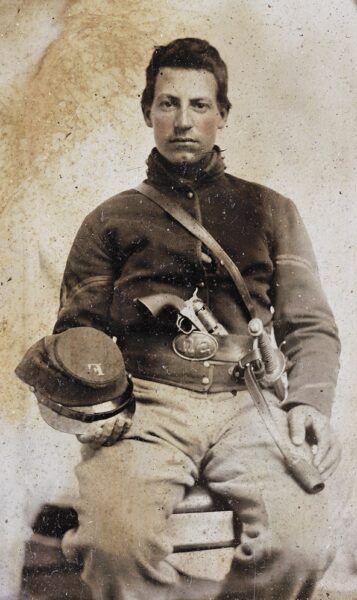
The Union's Handguns
The American Civil War, which pitted the Union against the Confederate States from 1861 to 1865, represents a fundamental period in the history of American firearms.
While Springfield and Enfield rifles remain associated with the infantry, the black powder revolver became the iconic sidearm of officers, cavalrymen, artillerymen, and many volunteers. The war generated an unprecedented increase in demand for firearms and profoundly transformed the American arms industry.
Colt, Remington, Starr, Smith & Wesson, Savage, Whitney, and many smaller manufacturers would participate, directly or indirectly, in this immense armament effort.
For collectors of antique American firearms, this period is of exceptional interest. The Colt 1851 Navy, Colt 1860 Army, Colt 1861 Navy, Remington Beals, Remington Model 1861, Remington New Model Army, Starr, and Smith & Wesson Model No. 2 Army are today among the most iconic pieces in collections dedicated to the American Civil War.
A Small American Army Before the War
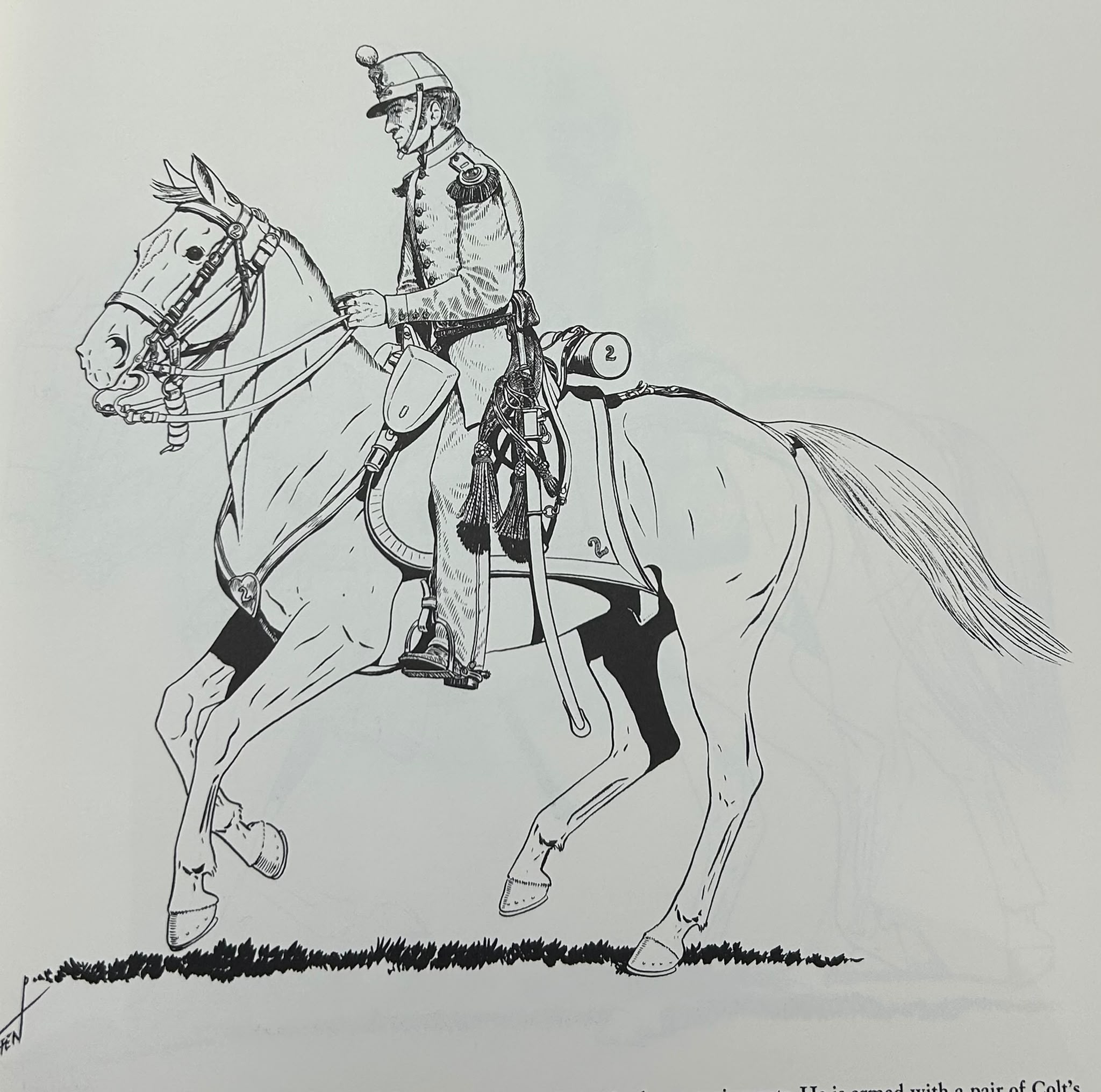
On the eve of the Civil War, the regular United States Army was a surprisingly small force. It numbered approximately 16,000 men, stationed throughout forts and territories in the American West.
Revolvers were not the standard individual weapon of every serviceman. They were primarily intended for officers, cavalry units, and certain artillerymen or specialized personnel.
This situation would change dramatically with the outbreak of the conflict in April 1861.
The armies of the Union and the Confederacy would quickly grow to include hundreds of thousands of soldiers. A large proportion of these men did not belong to the pre-war regular army. They were volunteers, militiamen, conscripts, and members of regiments raised by individual states.
This particular situation explains the extraordinary diversity of firearms encountered during the war.
Unlike a professional European army, American regiments were often equipped through multiple sources: the federal government, state governments, municipalities, private companies, influential individuals, officers, or even the soldiers themselves.
It is therefore essential, when studying Civil War revolvers, to distinguish between standard-issue military weapons, firearms purchased directly by the government, and personally owned firearms purchased by military personnel.
Colt and the Birth of the Modern Arms Industry
At the dawn of the Civil War, the company founded by Samuel Colt was already the largest handgun manufacturer in the United States.
Its Hartford factory represented a particularly advanced industrial model. Colt utilized modern machine tools, developed the manufacture of interchangeable parts, and organized production into specialized stages.
This organization made it possible to produce firearms in considerable quantities while maintaining relatively consistent quality.
The Colt company therefore played a crucial role in arming the Union, but its revolvers were also found in the hands of Confederate soldiers, particularly when they used captured weapons or revolvers acquired before the outbreak of the conflict.
The First Military Colt Revolvers
The Colt Walker 1847
The history of American military revolvers truly begins with the Colt Walker.
Designed in collaboration with Captain Samuel Walker, the famous Texas Ranger officer, the Walker was intended for mounted troops during the Mexican-American War.
Its .44 caliber, six-shot cylinder, and nine-inch barrel made it an extremely powerful weapon. The United States government ordered 1,000 examples in 1847.
The Walker was, however, very heavy, and certain mechanical weaknesses led Colt to quickly develop an improved model.
For collectors, the Colt Walker remains one of the most prestigious American handguns of the nineteenth century.
The Colt Dragoon
In 1848, the Colt Dragoon appeared as a direct descendant of the Walker.
Three principal models were manufactured until 1860. The Dragoon retained the .44 caliber but benefited from stronger construction and numerous improvements.
The U.S. Army purchased approximately 8,900 examples, making the Dragoon the principal standard-issue revolver of the American cavalry before the Civil War.
When the war began in 1861, several hundred of these revolvers remained in service.
Some officers also continued to carry their personally owned Dragoons, explaining the presence of these firearms in collections and photographs associated with the war.
The Colt 1849 Pocket: A Civilian Revolver Also Present During the War
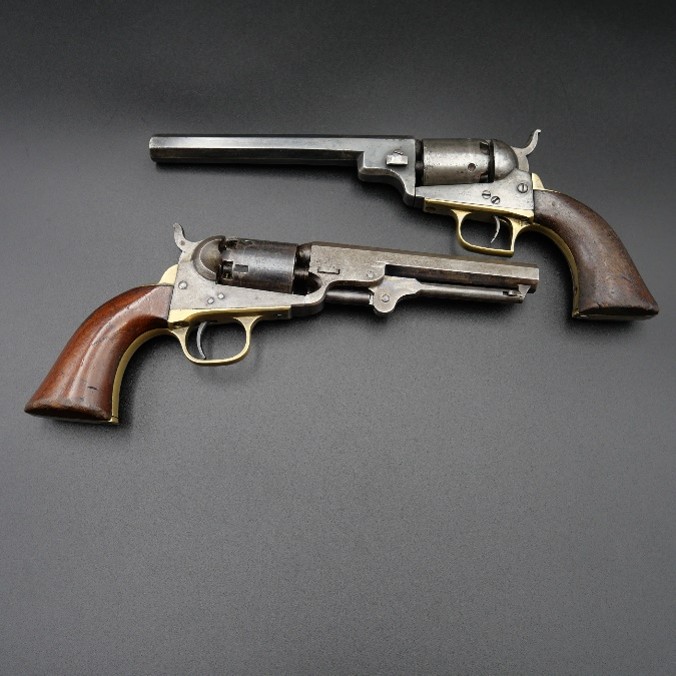
The Colt 1849 Pocket is a particularly interesting case.
Produced in more than 300,000 examples, it was primarily intended for the civilian market. Its .31 caliber and compact dimensions made it an especially popular personal weapon.
The United States government also acquired Colt 1849 revolvers in small quantities, particularly for the U.S. Navy and certain specialized purposes.
During the Civil War, many officers and soldiers owned privately purchased 1849 Pocket revolvers.
It was therefore not a standard-issue U.S. Army revolver, but rather a personal firearm frequently encountered within the military context of the conflict.
The Colt 1860 Army: The Great Revolver of the Civil War
Introduced in 1850, the Colt Model 1851 Navy quickly became one of the most popular revolvers in the United States.
Its .36 caliber, excellent accuracy, and remarkable balance made it highly appreciated by officers and servicemen alike.
Even before the war, the Ordnance Department had ordered 16,778 examples. Once the conflict began, the government also purchased additional revolvers from the civilian market in order to quickly equip volunteer regiments.
The Colt 1851 Navy therefore falls into both categories: a military firearm officially purchased by the government and a personal firearm purchased by military personnel.
For collectors, military examples are particularly desirable when they retain their inspection marks and acceptance stamps.
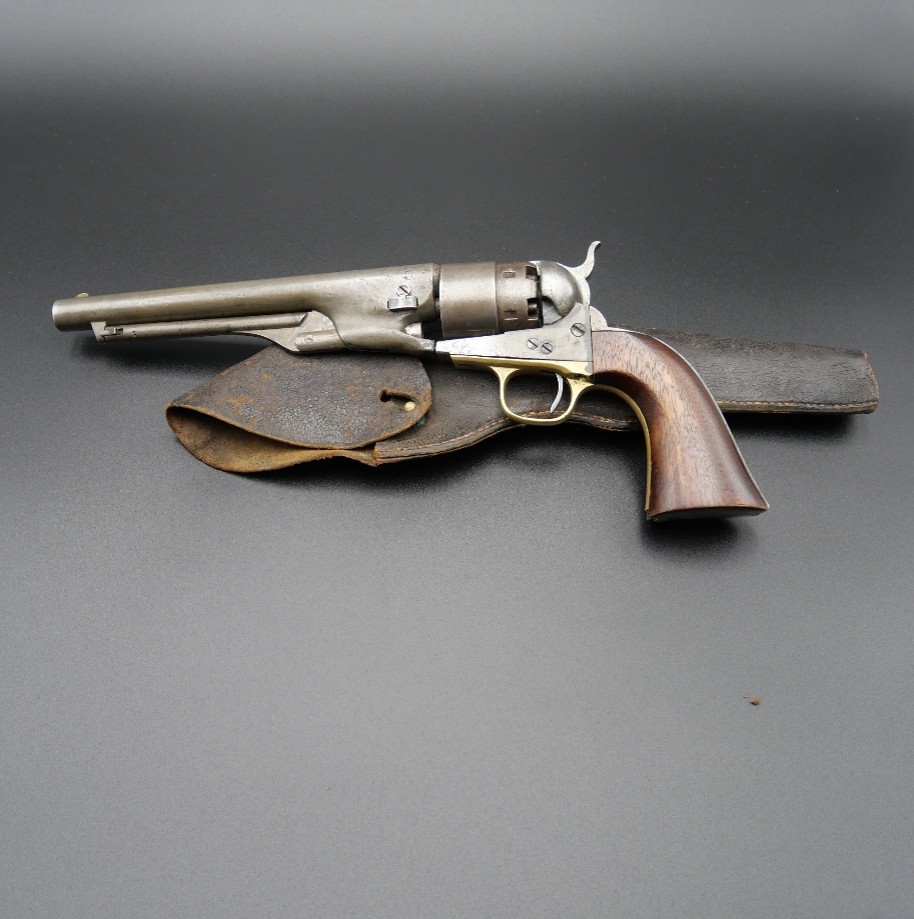
Le Colt 1860 Army : le grand revolver de la guerre civile
In 1860, Colt introduced its new Model 1860 Army.
The objective was to create a .44 caliber revolver offering power comparable to the Dragoon while being lighter and easier to handle.
The result was remarkable.
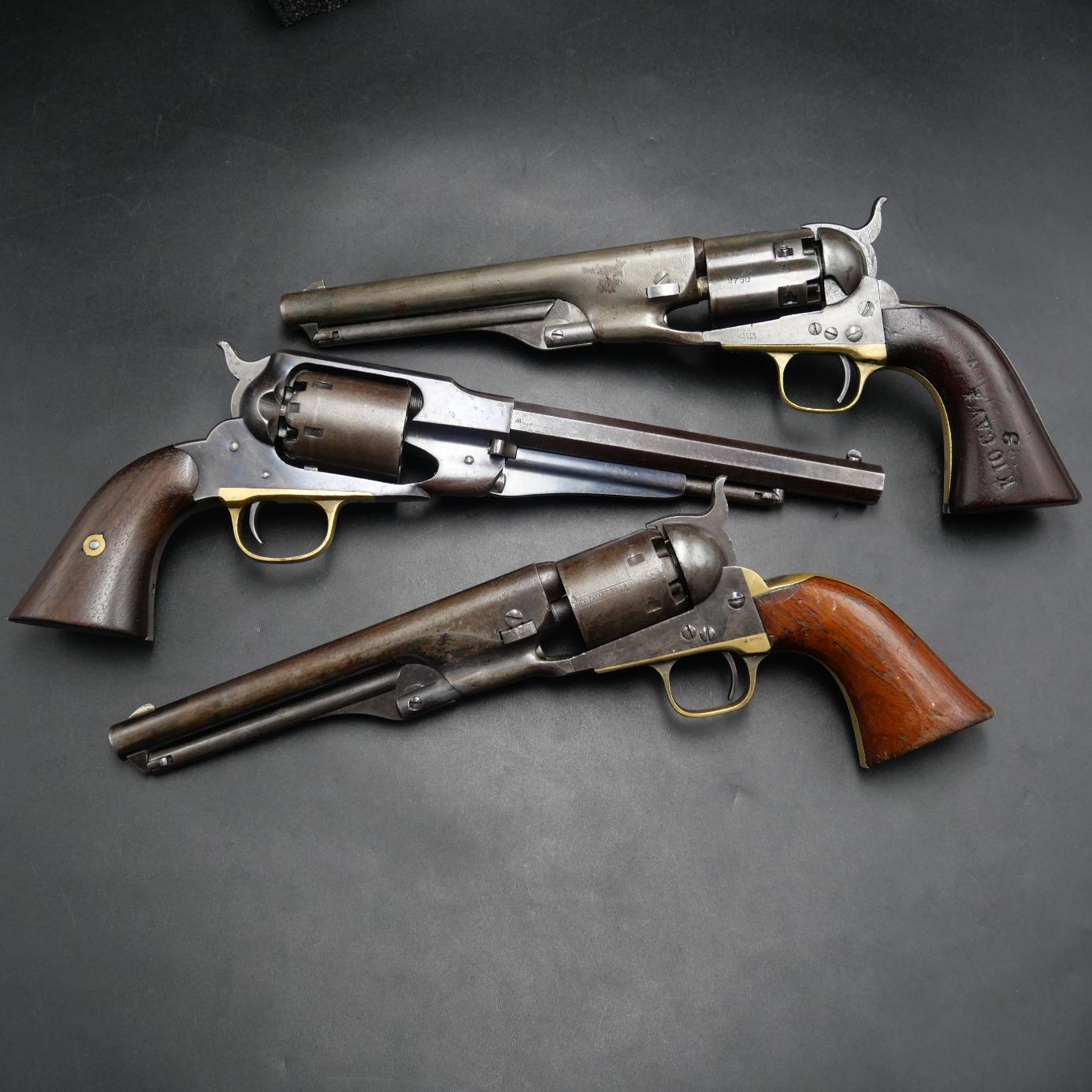
The Colt 1860 Army was the first .44 caliber revolver that could comfortably be carried in a holster on a belt, and it quickly became the standard revolver of Union cavalry.
The federal government ordered approximately 129,000 examples, making it by far the most widely used Colt military revolver during the war.
The Colt 1860 Army remains today one of the cornerstone pieces of any collection dedicated to Civil War firearms.
The Colt 1861 Navy
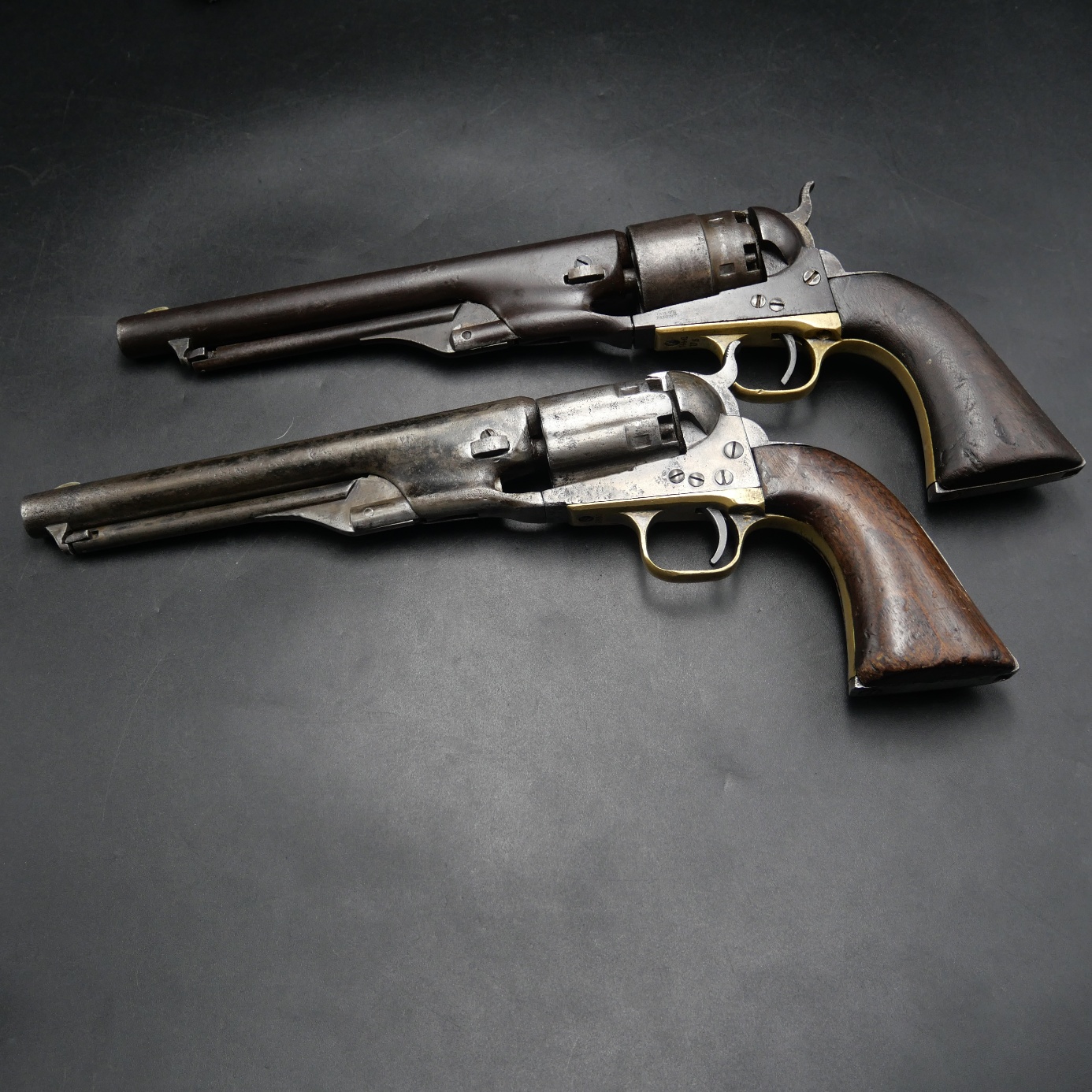
The Colt 1861 Navy appeared at the same time as the 1860 Army.
It retained the .36 caliber of the 1851 Navy but adopted a more modern silhouette, notably featuring a frame and overall profile inspired by the new 1860 Army.
The U.S. government purchased approximately 38,000 examples, primarily for the Navy and certain military units.
The 1861 Navy is less common today than the famous 1851 Navy and therefore represents a particularly interesting piece for specialized collectors.
The Colt 1862 Police
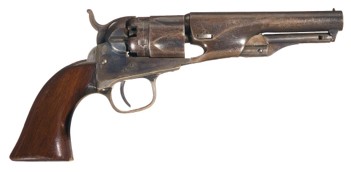
The Colt 1862 Police belongs to a different category.
It is a compact .36 caliber revolver designed primarily for the civilian market and personal defense.
It was not adopted as a standard-issue revolver by the U.S. Army and was never the subject of a major military contract comparable to the Colt 1860 Army. However, many officers purchased their own revolvers, and the 1862 Police can therefore be encountered in the context of the war.
This distinction is important for collectors: a firearm may have actually been used during the war without ever having been officially adopted by the military.
Remington: Colt's Great Rival
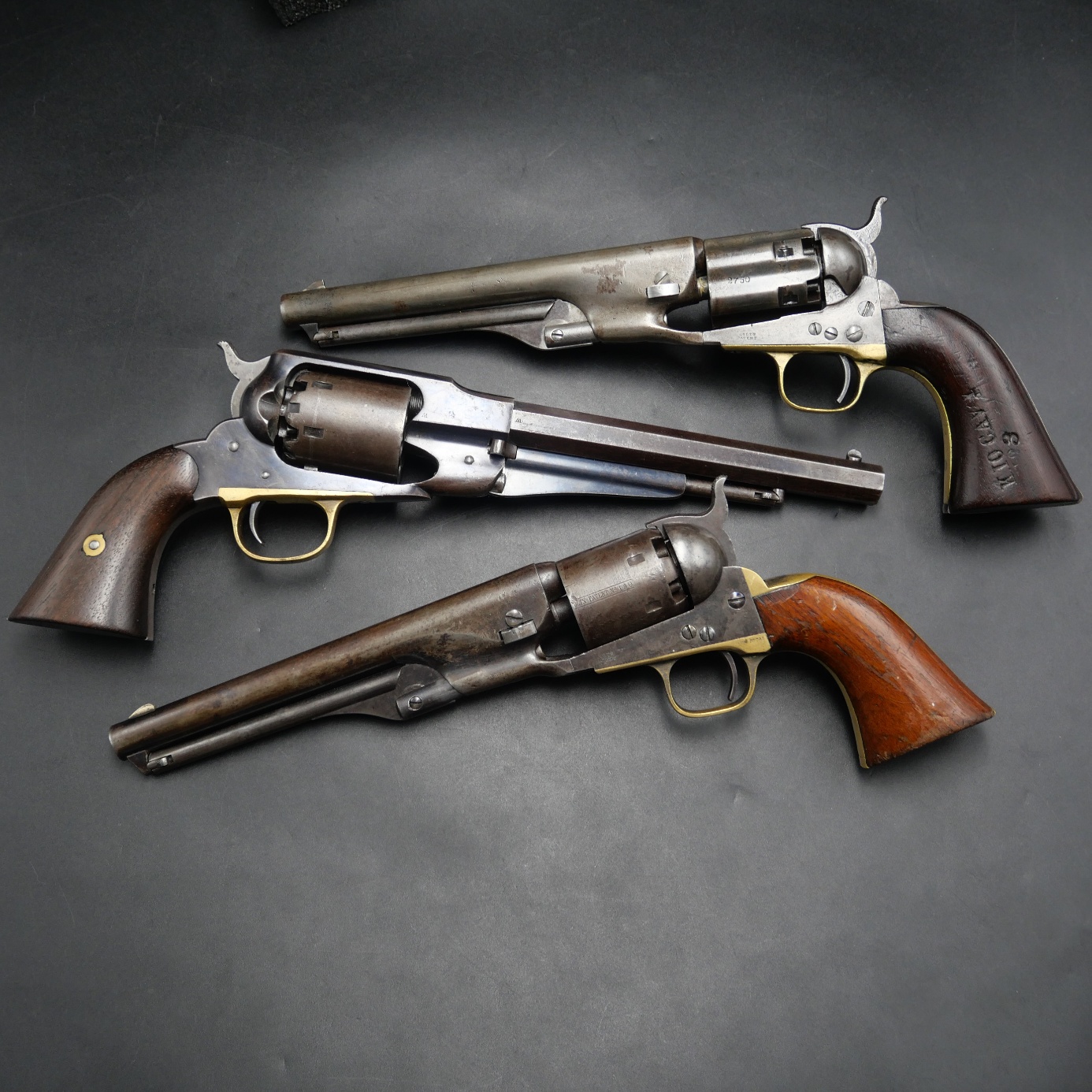
While Colt dominated the military revolver market, Remington simultaneously developed a family of firearms that would become its principal competitor.
Contrary to a commonly held belief, the famous Remington New Model Army was not the company's first military revolver.
It was preceded by two important models: the Beals Army and the Model 1861 Old Army.
The Remington-Beals Army
The first modern Remington military revolver was designed by Fordyce Beals. Its major innovation was its solid frame, which connected the barrel and the rear portion of the firearm.
This design provided exceptional rigidity and offered a significant advantage over the open-frame Colt revolvers.
In 1861, the government placed its first order for Remington revolvers. Production difficulties, however, meant that only about 850 .44 caliber Beals Army revolvers were ultimately delivered, along with approximately 7,250 .36 caliber Navy models.
Today, these early Remington revolvers are extremely sought after by collectors because of their rarity.
The Remington Model 1861 Old Army
Remington quickly improved the Beals design and introduced the Model 1861, often referred to today as the Old Army.
One of the principal improvements concerned the cylinder arbor, which could be removed more easily, allowing for faster cylinder changes.
The U.S. government ordered approximately 20,000 examples of this Army model. This production made the Model 1861 a genuine military revolver of the Civil War, even though its service life would soon be overshadowed by the arrival of the New Model Army.
Transition examples between the various Remington models are now a particularly fascinating area for specialized collectors.
The Remington New Model Army
Beginning in 1863, Remington produced the definitive version of its military revolver: the New Model Army. Its solid frame, durability, and ease of cylinder removal made it particularly popular among military personnel. As demand for revolvers exploded, Remington became a major supplier to the Union.
Approximately 96,000 New Model Army revolvers were delivered to the federal government before the end of the war.
The New Model Army thus became the principal rival of the Colt 1860 Army.
For collectors, the presence of inspection cartouches and matching serial numbers is particularly important.
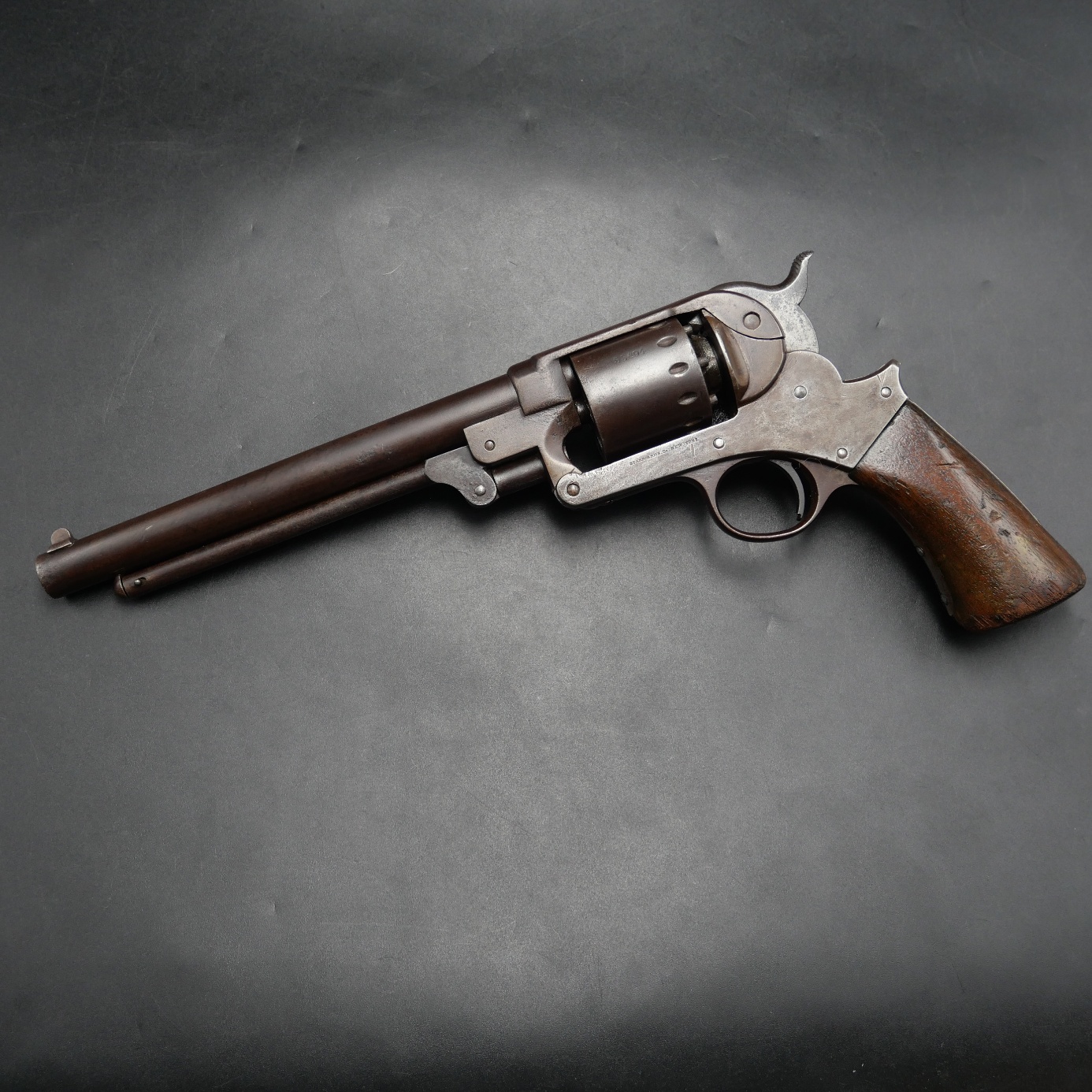
Starr: The Innovation of Double Action
The Starr Arms Company introduced a major innovation with its 1858 revolver.
The Starr Double Action was one of the first double-action revolvers adopted in significant numbers by the U.S. Army.
Its mechanism allowed the hammer to be cocked and the cylinder rotated simply by pulling the trigger.
This system offered a very high rate of fire, but its complex mechanism was more difficult to manufacture and maintain.
In 1863, Starr therefore developed a Single Action version that was simpler and less expensive.
In total, nearly 48,000 Starr revolvers were purchased by the federal government.
Rogers & Spencer Army
An Exceptional Military Revolver... Arriving Too Late
The Rogers & Spencer Army was one of the most interesting revolvers of the final years of the Civil War.
It was manufactured by Rogers & Spencer, a company based in New York State.
Chambered in .44 caliber, it featured a solid frame and an exceptionally robust design. Its mechanism was single action.
In November 1864, the federal government awarded a contract for 5,000 Rogers & Spencer revolvers. Deliveries began in January 1865 and continued during the final months of the war.
But timing worked against the manufacturer.
Although these revolvers were officially purchased for the Union Army, deliveries occurred too late for the Rogers & Spencer to see significant combat service during the war.
The revolvers were ultimately placed in storage in government arsenals.
The Rogers & Spencer is therefore particularly interesting to collectors: it was indeed a military revolver purchased by the federal government during the Civil War, but it should not be presented as a revolver that saw widespread service on the battlefields of 1861-1865.
After several decades of storage, the revolvers were eventually sold as surplus in the early twentieth century.
Today, the Rogers & Spencer is especially sought after for its high manufacturing quality, relative rarity, and its status as the last major percussion military revolver adopted by the Union during the war.
Smith & Wesson: The Personal Sidearms of Civil War Soldiers
The history of Smith & Wesson during the American Civil War is particularly interesting because it perfectly illustrates the difference between a government-issued weapon and a privately owned sidearm. While Colt and Remington primarily produced percussion revolvers, Smith & Wesson benefited from Rollin White's patent, which allowed the use of a cylinder bored through from end to end for metallic cartridges.
The small Smith & Wesson Model No. 1, chambered in .22 Rimfire, was already enjoying considerable success before the outbreak of the conflict.
But it was above all the Model No. 2 Army that attracted military interest.
Smith & Wesson: The Personal Sidearms of Civil War Soldiers
The history of Smith & Wesson during the American Civil War is particularly interesting because it perfectly illustrates the difference between a government-issued weapon and a privately owned sidearm.
While Colt and Remington primarily produced percussion revolvers, Smith & Wesson benefited from Rollin White's patent, which allowed the use of a cylinder bored through from end to end for metallic cartridges.
The small Smith & Wesson Model No. 1, chambered in .22 Rimfire, was already enjoying considerable success before the outbreak of the conflict.
But it was above all the Model No. 2 Army that attracted military interest.
Smith & Wesson Model No. 2 Army
Introduced in 1861, the Model No. 2 Army was chambered for .32 Rimfire and featured a six-shot cylinder. Its tip-up design allowed much faster reloading than percussion revolvers. The Federal Government never adopted it as a standard service revolver.
The Model No. 2 Army was purchased primarily through private acquisition by officers and enlisted soldiers. Several units nevertheless carried significant numbers of them. The case of the 7th Kentucky Volunteer Cavalry is particularly interesting, as the State of Kentucky acquired Smith & Wesson revolvers to equip its volunteers.
Total production of the Model No. 2 Army reached approximately 77,000 revolvers. For collectors, this firearm is therefore a particularly interesting example of the personal weapons carried by Union soldiers. The famous General George Armstrong Custer himself owned Smith & Wesson Model No. 2 Army revolvers, illustrating the popularity of this weapon among certain officers.
Other Union Revolvers
Colt, Remington, Starr, and Smith & Wesson were not the only manufacturers involved during the conflict.
Several other companies contributed to the war effort.
The Savage Navy Model 1861, recognizable by its distinctive double-trigger system, was purchased by the Federal Government and is now considered a particularly desirable collector's firearm.
The Whitney Navy revolvers, partly inspired by the Colt 1851 Navy, were also produced in quantity, and some were purchased by Union forces.
This diversity is one of the defining characteristics of the American Civil War: unlike a modern army equipped with a limited number of standardized models, American forces used many different types of revolvers simultaneously.
Major Revolvers of the American Civil War
| Model | Status During the War |
| Colt Walker 1847 | Military revolver, 1,000 ordered |
| Colt Dragoon | Standard military revolver before 1861, approximately 8,900 ordered |
| Colt 1849 Pocket | Primarily civilian, also carried as a personal sidearm |
| Colt 1851 Navy | Military revolver and personal sidearm, approximately 24,895 government purchases |
| Colt 1860 Army | Primary Union military revolver, approximately 129,000 |
| Colt 1861 Navy | Military revolver, approximately 38,000 |
| Colt 1862 Police | Primarily a personalsidearm |
| Remington-Beals Army | First Remington military revolver, approximately 850 |
| Remington Model 1861 Old Army | Military revolver, approximately 20,000 |
|
Remington New Model Army |
Principal rival of the Colt 1860 Army, approximately 96,000 |
|
Starr Double/Single Action |
Military revolver, approximately 48,000 |
|
Savage Navy |
Union military revolver |
|
Whitney Navy |
Military and commercial revolver |
|
Smith & Wesson No. 2 Army |
Primarily privately purchased by military personnel |
Conclusion
The American Civil War represents one of the most important periods in the history of the American revolver.
The conflict pitted two radically different industrial systems against each other. In the North, the large manufacturing firms of Colt, Remington, Starr, and other makers were capable of producing hundreds of thousands of firearms. In the South, a much more limited industrial base attempted to meet military needs by developing both copies and original designs.
The Colt 1851 Navy, Colt 1860 Army, Colt 1861 Navy, Remington-Beals Army, Remington Old Army, Remington New Model Army, and Starr represent the principal military revolvers of the period. Alongside them, the Smith & Wesson Model No. 1 and No. 2 Army illustrate the importance of personal sidearms purchased directly by soldiers.
For collectors, each of these firearms tells a different story. An inspector's mark, a serial number, an acceptance cartouche, or documented military provenance can transform a simple antique revolver into a genuine witness to the American Civil War.
More than 160 years after the end of the conflict, these firearms remain among the most sought-after pieces in collections of antique American firearms, valued for their historical significance, quality of manufacture, and direct connection to the history of the American West.