
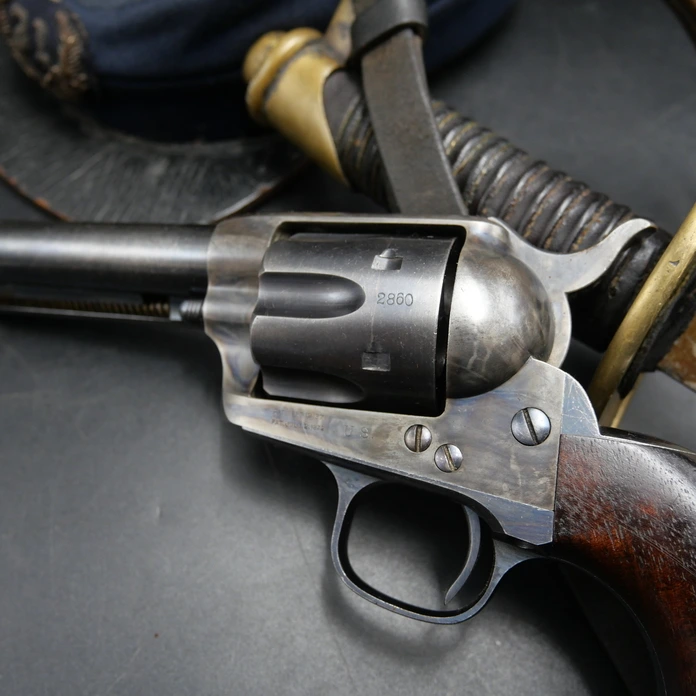
US Cavalry ‘Ainsworth’ Colt Single Action Army of 1874
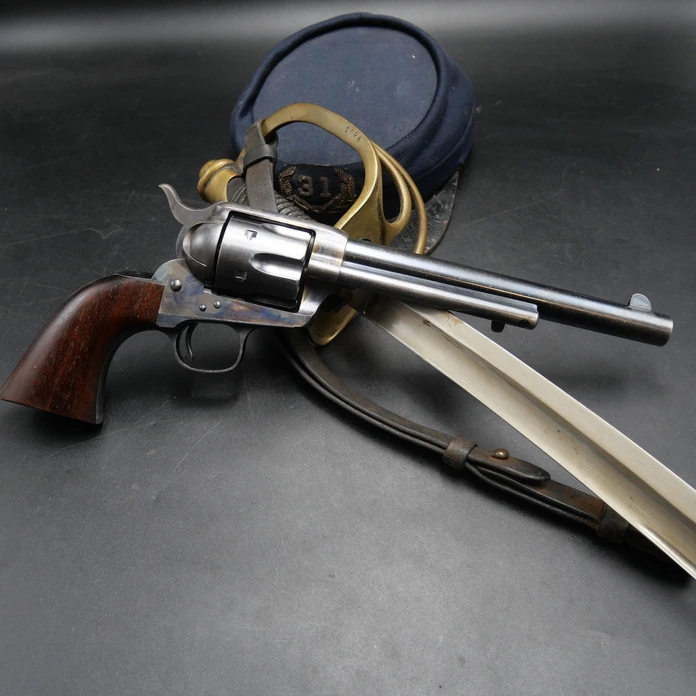
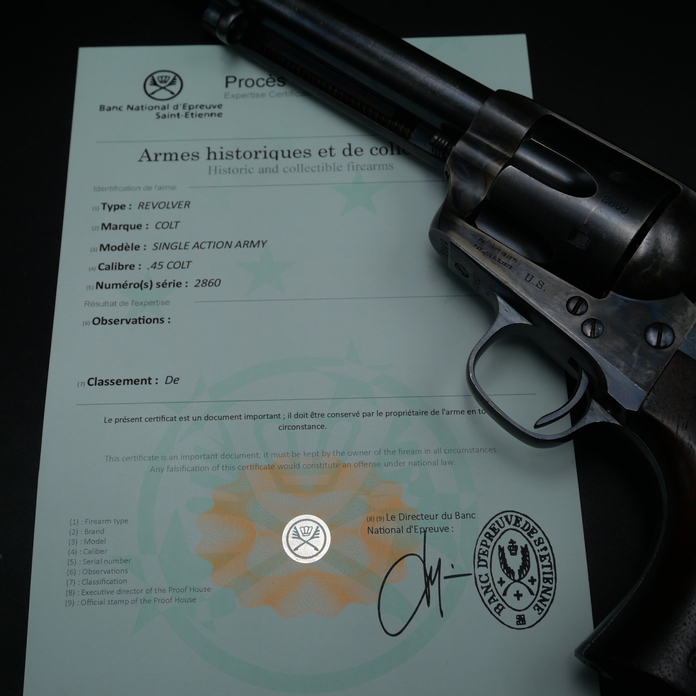
Colt Single Action Army US Army caliber .45, category D firearm, available for sale without restrictions, sold without accessories.
History
The US Army made the right choice when it adopted the Colt Single Action Army revolver as its standard-issue sidearm in 1873, marking a key milestone in military weaponry in the aftermath of the Civil War. This revolver quickly became the symbol of the Bluecoats, particularly within the US Cavalry, playing a crucial role in the Plains Indian Wars, the defense of the Frontier, and the epic adventures of the Wild West. Beyond American borders, it also found its place in international theaters of operation. The US Army opted for the .45 caliber, chosen for its firepower, and ordered more than 37,000 Colt Single Action Army revolvers. This caliber offered an undeniable tactical advantage against the threats encountered in the field, combining robustness and effectiveness. For collectors and specialists in historical firearms, the year of production of each revolver is a determining factor. It not only allows us to identify which military inspector validated the weapon, but also to trace its potential history during the Indian Wars, thus adding a valuable heritage dimension to each piece. These details allow us to better understand the journey of these legendary Colt revolvers, witnesses to a fascinating era in American history.
This revolver is attributed to the 4th US Cavalry Regiment, a prestigious regiment created in 1855 with a rich history of military campaigns dating back to the 19th century. Initially stationed in the West, the regiment fought the Cheyenne, making history by leading the first saber charge in the region. During this battle, Cheyenne warriors, believing they were protected only by their medicine man against bullets, were surprised and paralyzed by the attack. It was during this confrontation that a young lieutenant, J.E.B. Stuart, the future iconic general of the Confederate cavalry, was wounded. During the American Civil War, the 4th US Cavalry fought on both the Eastern and Western fronts. In 1865, it distinguished itself by successfully engaging the famous Confederate general Nathan Bedford Forrest. After the Civil War, the regiment was involved in conflicts in the American West, notably against the Apaches in Texas. Part of these campaigns inspired the famous film Rio Grande starring John Wayne. The regiment then participated in several significant campaigns: the Red River War, the pursuit of the survivors of the Battle of Little Bighorn until their surrender, as well as further operations against the Apaches, including the capture and surrender of Geronimo in Arizona. Finally, the 4th US Cavalry also fought in the Spanish Civil War. This regiment exemplifies the eventful and glorious history of the American cavalry in the 19th century.
Historic Colt Revolver Restored by Tommy Haas
Our Model
Well-restored firearms can possess exceptional character, and this is precisely the case with this historic piece that passed through the hands of the renowned Tommy Haas. This revolver is part of the prestigious first military contract to equip the United States cavalry regiments, beginning in 1873. Our example, with its serial number 28XX, was issued to the 4th Cavalry Regiment in 1874. These revolvers were inspected by Orville W. Ainsworth, whose inspection mark, the famous "A," is particularly sought after by collectors.
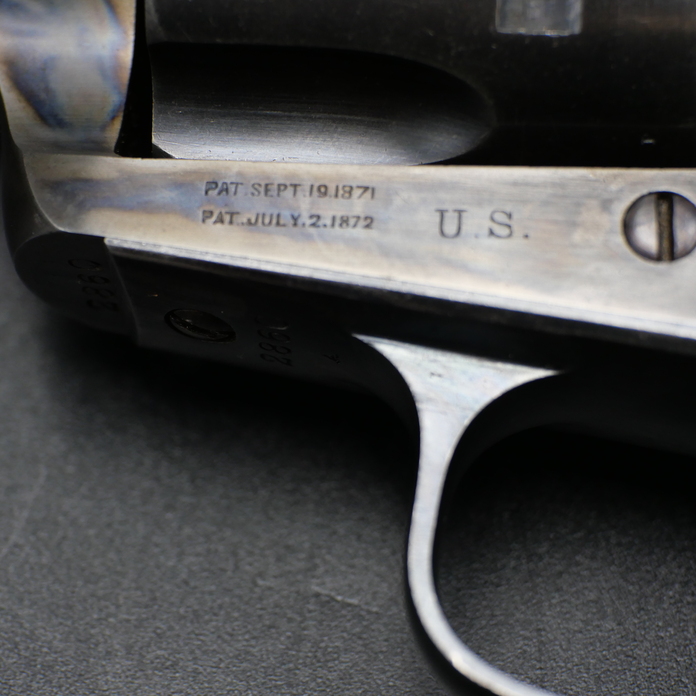
This firearm has been superbly restored to its original colors, and the passage of time has given it a magnificent patina. The frame and hammer feature superb case hardening, with authentic hues from the period. The barrel, trigger guard, and cylinder feature a deep blue finish, enhanced by an aged patina that adds even more character. The Colt markings are accurate and well-preserved, including the address on the barrel and the patent markings on the frame, all faithful to the original. The serial number 28XX, which dates this weapon to before the Battle of Little Bighorn, is matching and present on various parts of the revolver, including the cylinder. The markings of the military inspector of the time, O.W. Ainsworth, are clearly visible on several sections, notably under the grip, on the barrel, and on the frame. The "US" marking on the frame is also well-preserved. The ejector is of the so-called "donut" type, consistent with early production models.
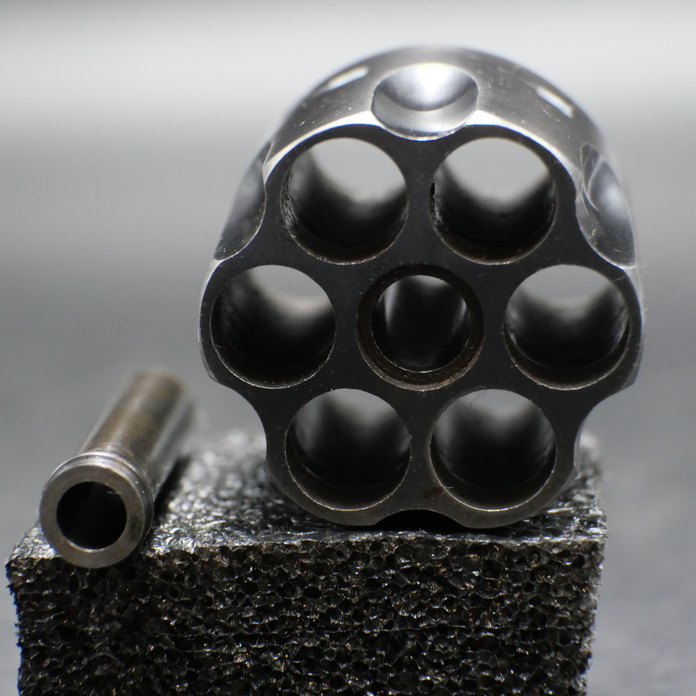
Mechanically, the condition is impeccable: the four characteristic Colt clicks are perfectly defined, and there is no play or gap. The 7.5-inch barrel, chambered in .45 caliber, is in perfect condition, with a mirror-bright bore and no flaws whatsoever. The stock, made of oiled American walnut, bears the inspector's cartridge on its left side, in accordance with regulations.
This collector's item, carried by the 4th Cavalry Regiment of the United States, is an exceptional relic of the Indian Wars and embodies a crucial chapter in history.
Additional information
| Brand | |
|---|---|
| Era | |
| Arms Type | |
| State | |
| Loading |